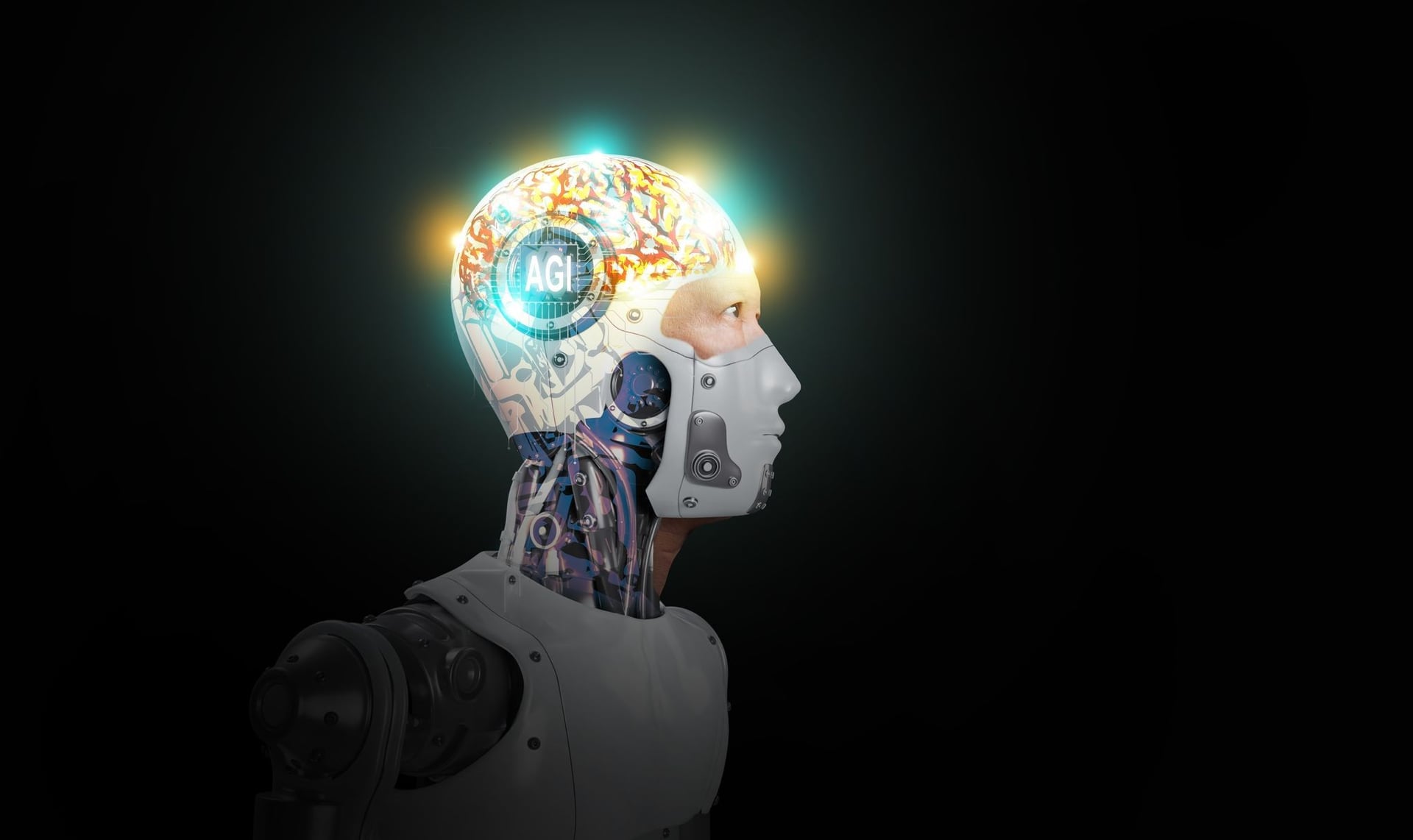

Artificial intelligence is transforming how businesses operate, but not all AI is the same. In this guide, you’ll discover the 7 types of AI, how they work, and real-world examples you can actually understand. Whether you're exploring AI for your company or just learning the basics, this breakdown will give you a clear and practical overview.
Yet many people still ask an essential question: What are the 7 types of AI?
Understanding the 7 types of AI is crucial because not all AI systems are equal. Some are limited to narrow tasks, while others represent theoretical stages of intelligence that do not yet exist. These classifications help explain AI capabilities, AI learning capability, and the different stages of AI development.
Artificial intelligence is commonly divided into two main categories:
- Types based on capabilities
- Types based on functionality
Together, these form the widely recognized structure known as the seven types of AI.
This guide explains each type clearly, explores AI levels, discusses real-world applications, and clarifies what is currently possible versus what remains theoretical.
What Is Artificial Intelligence?
Artificial intelligence services is a branch of computer science focused on building machines capable of performing tasks that require human intelligence. These tasks include reasoning, pattern recognition, decision-making, language understanding, and data learning.
Leading organizations such as IBM and OpenAI have played a major role in advancing AI systems and improving the types of AI models used in business and research.
The name for artificial intelligence reflects its core goal: creating intelligent behavior in machines. However, machine intelligence does not imply consciousness. Instead, it refers to the ability to analyze data and generate useful outputs.
To fully understand artificial intelligence, we must examine its structured classification. Experts divide AI into levels and functional stages. These classifications help clarify the type of AI being discussed and its limitations.
The 3 Levels of AI Based on Capabilities
The first classification focuses on the depth of intelligence. These AI levels describe how advanced a system is compared to human intelligence.
1. Artificial Narrow Intelligence
Artificial Narrow Intelligence, often abbreviated as ANI, is the most common type of AI in use today. It is also known as weak AI. Despite the word weak, this system can perform complex tasks efficiently within its designated scope.
Artificial narrow intelligence is designed for a specific purpose. It cannot operate beyond the task for which it was trained. For example:
- Email spam filters detect unwanted messages
- Recommendation engines suggest products or movies
- Voice assistants answer predefined questions
- AI robot systems automate manufacturing processes
Even advanced conversational systems like ChatGPT are examples of artificial narrow intelligence. They generate responses using statistical patterns learned from large datasets. They do not possess true understanding or independent reasoning.
ANI demonstrates strong AI learning capability within defined boundaries. It can analyze vast amounts of information and make accurate predictions. However, it cannot transfer knowledge across unrelated fields.
Most businesses today rely on artificial narrow intelligence because it delivers measurable results without requiring general reasoning.
2. Artificial General Intelligence
Artificial General Intelligence, or AGI, represents the next stage of AI. Unlike artificial narrow intelligence, AGI would match human intellectual capabilities across a wide range of tasks.
An AGI system would:
- Learn new subjects without retraining
- Apply reasoning across disciplines
- Adapt to unfamiliar environments
- Understand abstract concepts
For example, an AGI system could learn law, design software, compose music, and conduct scientific research without needing separate specialized programming.
Despite significant advances in AI model types, AGI has not yet been achieved. Current systems remain specialized and limited.
AGI remains a long-term research goal rather than an operational technology.
3. Artificial Superintelligence
Artificial Superintelligence represents the highest theoretical level of AI. This stage would exceed human intelligence in every measurable way.
A superintelligent system would outperform humans in creativity, strategic planning, emotional intelligence, and scientific discovery. It would not simply replicate human thinking. It would surpass it.
At present, Artificial Superintelligence does not exist. Discussions about it are primarily philosophical and ethical.
When people refer to the most advanced AI imaginable, they are usually describing Artificial Superintelligence.
The 4 Functional Stages of AI
The second classification explains how AI systems operate internally. These functional stages of AI describe how systems process and use information.
4. Reactive Machines
Reactive Machines are the most basic type of AI. These systems respond only to present input and do not store memories.
A famous example is Deep Blue, developed by IBM. It defeated world chess champion Garry Kasparov by evaluating millions of possible moves per second. However, it could not learn from previous games.
Reactive machines operate according to fixed rules and perform immediate analysis. They have no historical awareness and no adaptive learning capability.
Although limited, they remain useful in predictable and structured environments.
5. Limited Memory AI
Limited-Memory AI improves upon reactive systems by temporarily storing historical data. It uses this information to improve future decisions.
Most modern AI applications fall into this category. Examples include:
- Self-driving car systems
- Fraud detection software
- Predictive analytics platforms
- Generative AI examples, such as text and image generators
These systems rely on machine learning frameworks such as TensorFlow to train models on large datasets.
Limited Memory AI represents the most commercially viable and widely deployed AI stage today.
6. Theory of Mind AI
Theory of Mind AI represents a more advanced stage of artificial intelligence. This type of AI would understand human emotions, beliefs, intentions, and social interactions.
Unlike reactive or limited-memory systems, Theory of Mind AI would interpret mental states and adapt its responses based on emotional context. It would recognize tone, facial expressions, and social cues.
Some experimental AI robot systems, such as Sophia, simulate emotional interaction. However, these systems do not truly understand emotions. They rely on programmed behavioral models and sentiment analysis.
True Theory of Mind AI has not yet been developed. It remains a research objective within the broader discussion of AI capabilities.
7. Self-Aware AI
Self-aware AI is the final and most speculative stage among the seven types of AI. A self-aware AI system would possess consciousness and self-recognition.
Such a system would understand its own existence and act with independent awareness. It would not merely process data. It would experience awareness.
Currently, self-aware AI does not exist. Even the most advanced AI systems operate through algorithms and probability models.
Self-aware AI remains theoretical and is often discussed in ethics and philosophy rather than engineering practice.
Most Advanced AI Today
The most advanced AI currently available falls under the category of artificial narrow intelligence, with limited memory functionality. These systems demonstrate impressive AI learning capability, but they remain domain-specific.
There is no existing self-aware AI or Artificial General Intelligence operating independently.
Understanding this distinction prevents unrealistic expectations and supports responsible innovation.
Why Understanding the 7 Types of AI Matters
Clear knowledge of AI levels and AI stages helps businesses make informed decisions. It prevents confusion between marketing hype and technical reality.
Developers benefit from understanding which type of AI model fits their needs. Enterprises benefit from aligning AI capabilities with strategic goals.
Education systems use structured AI topics and lesson components to clearly explain these differences to students.
Accurate classification strengthens strategic planning and supports long-term technology investment.
How Golabs Can Help You Build Intelligent Solutions
Artificial intelligence delivers real business value only when it is implemented correctly. Choosing the right type of AI, selecting appropriate AI models, and aligning AI capabilities with business goals require technical expertise.
Golabs specializes in building scalable, production-ready software solutions powered by modern AI technologies. Whether you are integrating AI into an existing system, developing automation tools, or designing data-driven platforms, Golabs provides strategic guidance and engineering excellence.
From architecture design to deployment, Golabs helps organizations leverage artificial narrow intelligence and limited memory AI effectively and responsibly.
If you are ready to transform your business with intelligent systems, Golabs is prepared to support your journey from concept to execution.